SEO · 5 min read
Local SEO Checklist for US Healthcare Practices 2026 in 2026
Follow this 9-step local SEO checklist to help your medical clinic rank on Google Maps, build citation authority, and capture high-intent patients in your area.
Published · Updated · 5 min read
On this page12 sections
- The Ultimate Local SEO Checklist for US Healthcare Practices
- Step 1: Claim and Optimize Your Google Business Profile (GBP)
- Step 2: Ensure NAP Consistency Across the Web
- Step 3: Build Healthcare-Specific Citations and Directories
- Step 4: Collect and Manage Patient Reviews Compliantly
- Step 5: Optimize Your Website for Local Search
- Step 6: Use Localized Medical Content
- Step 7: Build Local Backlinks
- Step 8: Optimize for Mobile and Voice Search
- Step 9: Monitor Local SEO Performance
- Conclusion
- Frequently Asked Questions (FAQs)
Key takeaways
- Claim the clinic's Google Business Profile and practitioner profiles for lead doctors, then set accurate categories, hours and a booking link.
- Your name, address and phone number must match exactly everywhere; even mixing Ste and Suite can confuse search engines.
- List the practice on healthcare directories such as Healthgrades, Zocdoc, WebMD Care and Vitals, with insurances and physician credentials filled in.
- Reply to every review professionally, but never disclose health information or confirm that the reviewer was a patient.
- Add MedicalClinic or Physician schema and a dedicated landing page for each city you serve, and expect three to six months for map results.
The Ultimate Local SEO Checklist for US Healthcare Practices
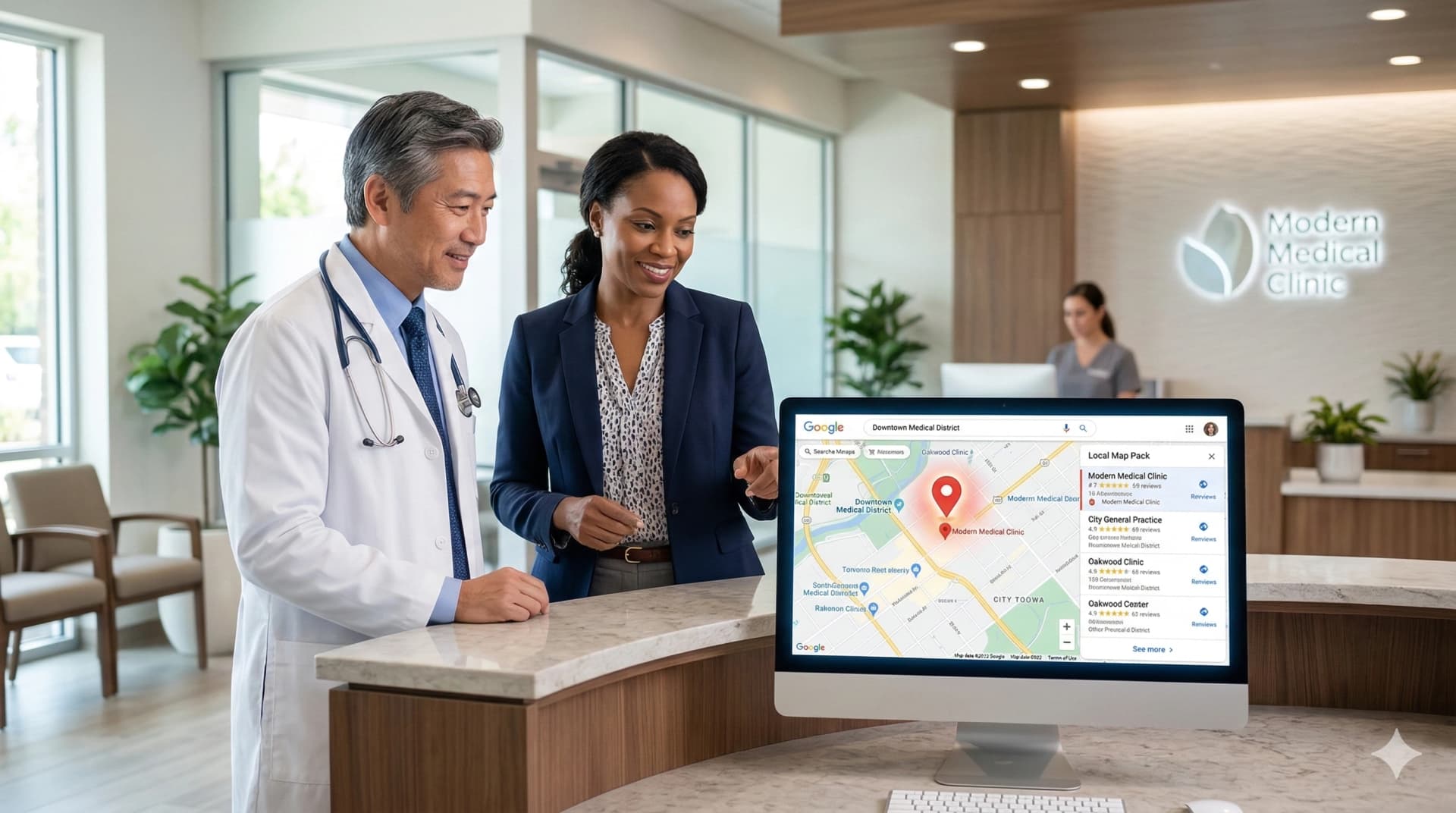
For medical clinics in the USA, local search visibility is the lifeblood of patient acquisition. When potential patients search for "urgent care near me" or "pediatrician in [City]," appearing in the top three results of the Google Map Pack can dramatically increase your daily appointment volume.
A highly technical local SEO strategy ensures your practice is easily discoverable by patients who need immediate care or specialized treatments in your exact geographic area. This checklist provides actionable, step-by-step instructions for clinics to optimize their digital footprint and lead local healthcare search.
Step 1: Claim and Optimize Your Google Business Profile (GBP)
Your Google Business Profile is the absolute foundation of your Healthcare SEO strategy.
Key actions:
- Claim or verify your clinic's main profile, as well as individual "Practitioner Profiles" for your lead doctors.
- Select the most accurate primary category (e.g., Family Practice Physician) and relevant secondary categories.
- Add your exact service areas and ensure your holiday/emergency hours are 100% accurate.
- Include a direct link to your HIPAA-compliant patient scheduling portal.
- Upload high-resolution photos of your building's exterior, waiting room, and treatment areas to reduce patient anxiety.
Step 2: Ensure NAP Consistency Across the Web
Consistency of your clinic's Name, Address, and Phone number (NAP) is the core trust signal for search engine algorithms.
Tips for medical practices:
- Your NAP must be identical across your website, social media, and medical directories. "Ste 100" and "Suite 100" should not be mixed.
- Use a local area code for your primary phone number, not an 800 number, to signal strong local relevance.
- If you run a multi-location clinic, ensure each location has a dedicated, unique phone number and localized landing page. A Digital Marketing Agency can audit your existing listings and correct inconsistencies across all platforms efficiently.
Step 3: Build Healthcare-Specific Citations and Directories
Standard directories like Yelp are fine, but medical practices need niche-specific citations to build true domain authority.
Recommended healthcare listings:
- Healthgrades
- Zocdoc
- WebMD Care
- Vitals
- RateMDs
- The local Chamber of Commerce
Ensure your accurate NAP, accepted insurances, and physician credentials are comprehensively filled out on every single platform.
Step 4: Collect and Manage Patient Reviews Compliantly
Reviews directly influence local rankings and patient click-through rates. However, doctors must manage these carefully.
Best practices:
- Use an automated SMS system to request reviews from patients two hours after they leave your clinic.
- Respond to all reviews professionally, but never disclose Protected Health Information (PHI) or confirm they were a patient in your public reply.
- Encourage patients to mention specific services in their reviews (e.g., "Great sports rehab experience"), as keyword-rich reviews act as massive local ranking factors.
Read more on how reviews impact search in our guide to Medical FAQ SEO and Patient Acquisition.
Step 5: Optimize Your Website for Local Search
Your website structure must aggressively support your local presence. Key on-page elements:
- Implement MedicalClinic or Physician Schema markup (structured data) in your website's code so Google understands your exact medical specialties and operating hours.
- Create dedicated, location-specific landing pages for every city you serve (e.g., a dedicated page for Dentist SEO Services in California versus a page for Texas).
- Embed a dynamic Google Map showing your clinic's exact location in your footer.
- Ensure your site architecture is lightning-fast and natively built for mobile users with expert Medical Website Design.
Step 6: Use Localized Medical Content
Content marketing helps you rank for long-tail, procedure-specific keywords in your service areas. Pairing strong content with SEO Services amplifies your rankings across every neighborhood you serve.
Content ideas:
- Publish blog posts addressing localized health concerns (e.g., "Preparing for Cedar Fever Allergy Season in Austin, TX").
- Create detailed FAQ pages for high-ticket procedures, optimizing the headers with the names of your surrounding neighborhoods.
- Highlight any community health seminars or local charity events your doctors participate in.
Step 7: Build Local Backlinks
Backlinks from other local websites act as "votes of confidence," increasing your geographic ranking authority.
Strategies for clinics:
- Sponsor local high school sports teams or community 5K runs (they will link back to your site from their sponsor page).
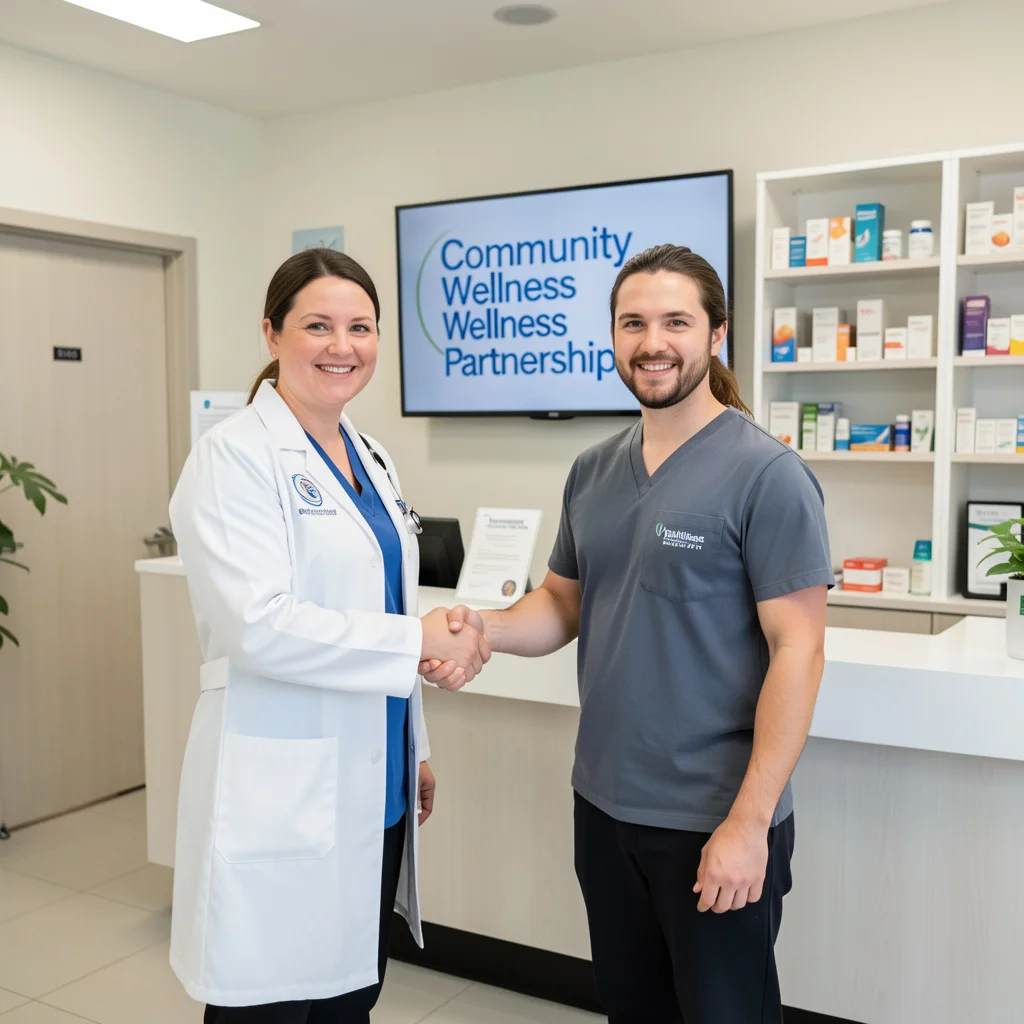
- Partner with local gyms or wellness centers to cross-promote services.
- Distribute press releases to local news outlets when you acquire new, state-of-the-art medical technology.
Step 8: Optimize for Mobile and Voice Search
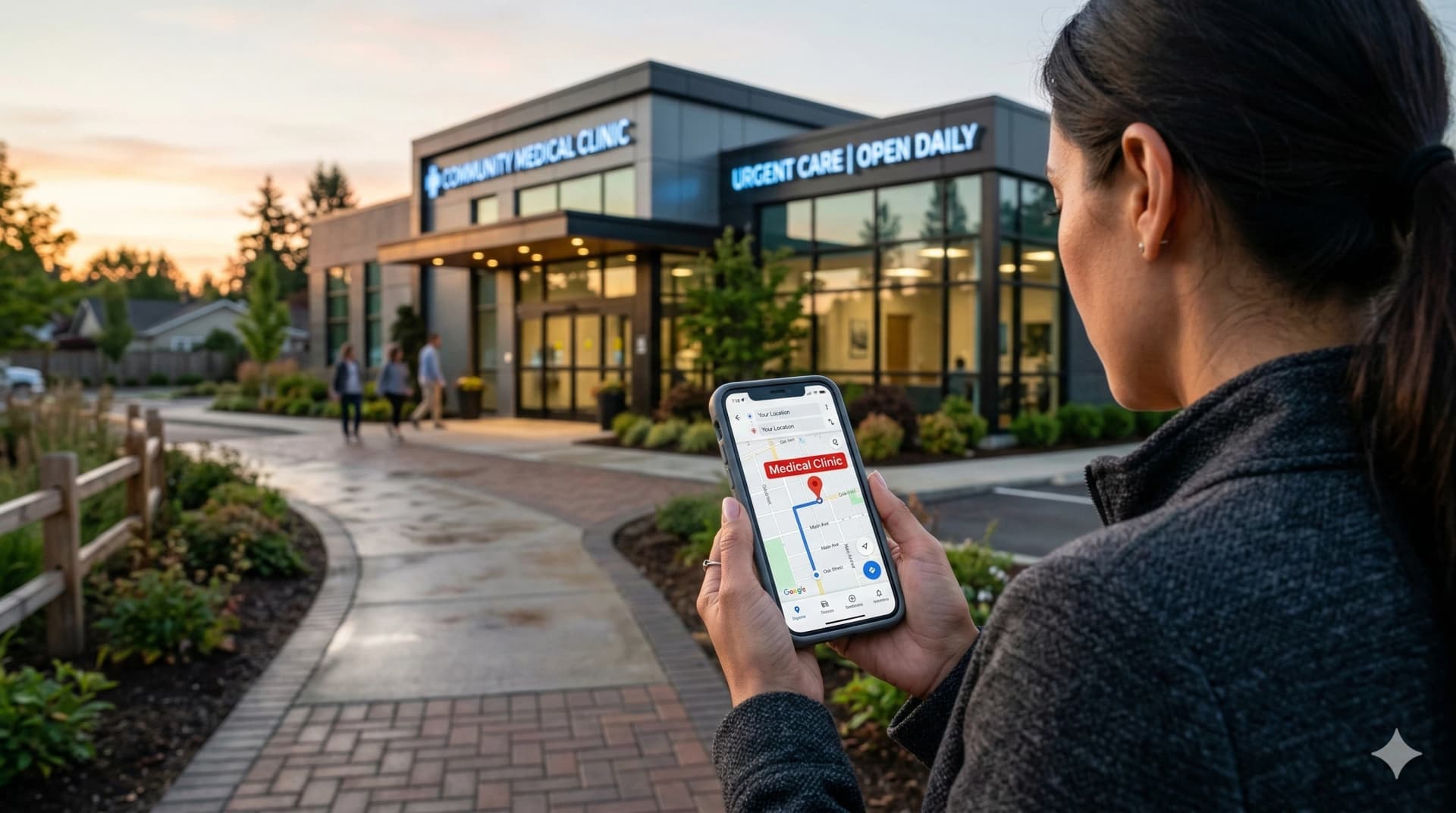
When patients experience a sudden injury, they often use voice search on their phones (e.g., "Siri, find an urgent care near me open right now").
Recommendations:
- For immediate care facilities, optimizing for conversational, natural language keywords is critical. Running Google Ads Management alongside your SEO ensures you capture patients through both organic and paid channels while your rankings build.
- Use concise meta descriptions and structured FAQ data to capture Google's "Featured Snippets."
- Ensure your website's "Click-to-Call" buttons are prominent on mobile screens.
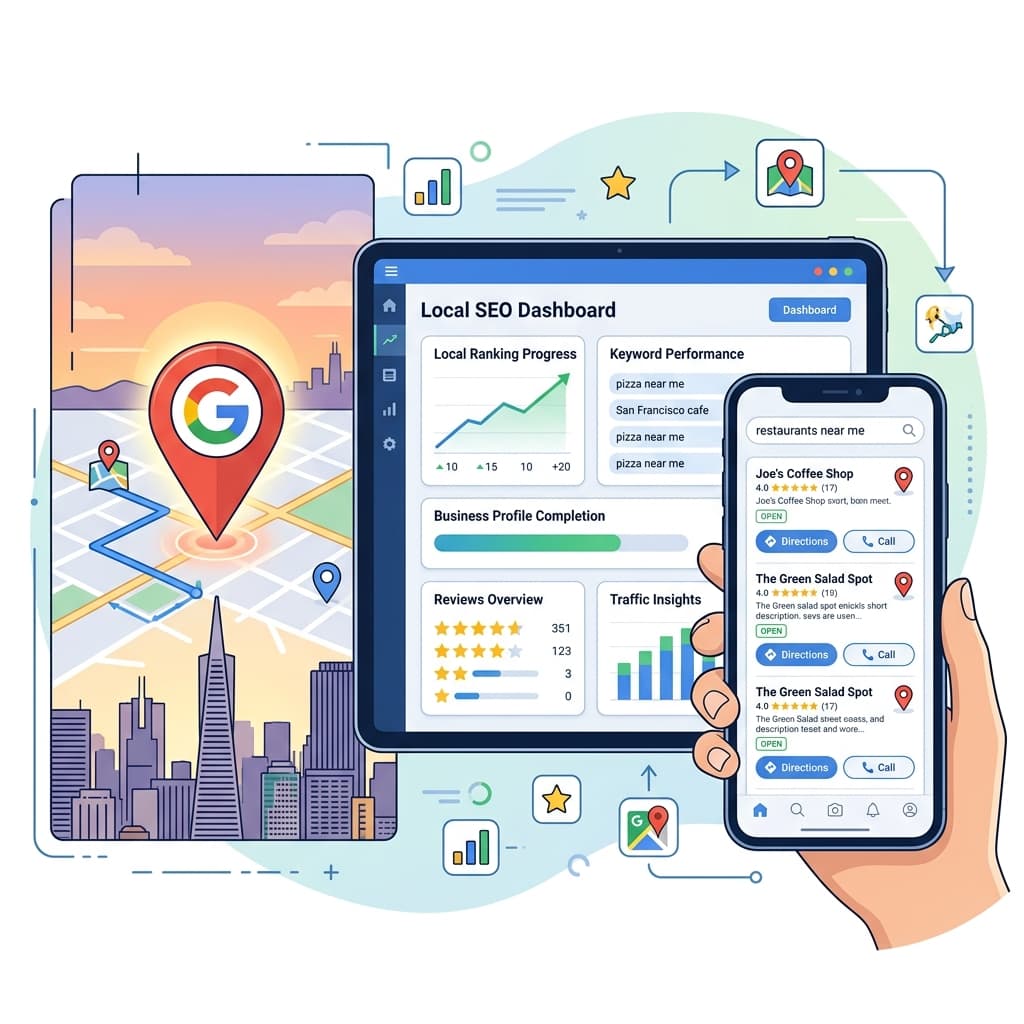
Step 9: Monitor Local SEO Performance
Tracking your local metrics ensures your SEO investments are actually converting into booked patients.
What to track:
- Google Business Profile insights (direction requests, direct phone calls).
- Keyword rankings for specific service lines across different local zip codes.
- Conversion metrics (completed intake forms and confirmed appointments).
For a real-world example of how tracking and local optimization drive revenue, review our Sports Rehab Google Ads Case Study in Fremont. You can also explore our detailed breakdown of how to analyze and improve medical ad performance to refine your tracking setup further.
Conclusion
Implementing a comprehensive, highly technical local SEO checklist ensures medical practices can attract high-intent patients, increase daily bookings, and outrank competing hospital networks in local searches. By optimizing your GBP, managing niche citations, deploying local Schema markup, and building community backlinks, you construct a resilient digital foundation that drives consistent patient volume and long-term revenue.
Start Your 30-Minute Lead Mapping Session with GrowLimo
Frequently Asked Questions (FAQs)
1. How long does it take to see results from local healthcare SEO?
Local SEO is a long-term strategy. While optimizing your Google Business Profile can yield quick wins within a few weeks, building consistent local citations, gathering patient reviews, and climbing to the top of the Google Map Pack typically takes 3 to 6 months of consistent effort.
2. What is the most important ranking factor for local medical SEO?
Your Google Business Profile (GBP) is the number one ranking factor. Following closely behind are NAP consistency across the web, the volume and frequency of your patient reviews, and the proximity of your clinic to the person searching.
3. Can a multi-doctor clinic have multiple Google Business Profiles?
Yes. Google allows one main "Practice" profile for the physical clinic location, and separate "Practitioner" profiles for individual doctors or surgeons. However, these must be structured carefully so the individual doctors do not cannibalize or compete with the main clinic's search rankings.
4. Why is NAP consistency so critical for medical practices?
Search engines like Google use your Name, Address, and Phone Number (NAP) to verify your clinic's legitimacy. If your website says "Suite B" but your Yelp profile says "Ste B," or if you have old phone numbers floating around on directory sites, it confuses the algorithm and actively damages your local ranking authority.
5. Do local directory listings still matter for doctors?
Absolutely. While generic directories have lost some SEO power, healthcare-specific directories (like Healthgrades, Zocdoc, Vitals, and WebMD Care) pass massive trust signals to Google. Ensuring your clinic is accurately listed on these niche directories is mandatory for local medical SEO.