Instagram Reels for Healthcare: Best Practices for 2026 (Without Risking a HIPAA Violation)

The Conversation I Have With Almost Every Healthcare Client About Reels
There is a moment that happens in nearly every first call I have with a practice owner or a clinic's office manager about social media, and it goes roughly like this: they want to do Reels because they have seen a competitor's clip with thousands of views, but they are quietly terrified of accidentally violating HIPAA, getting flagged by their state medical board, or putting something out that makes the practice look unprofessional. So nothing gets posted. Or worse, something gets posted inconsistently by whoever has five minutes that week, with no real strategy behind it, and it dies after three weeks because nobody had a system.
That tension — wanting the reach, fearing the risk — is the entire reason this guide exists. I am not going to tell you Reels are a magic bullet, because they are not. I am also not going to give you the overly cautious, lawyer-written version of this advice that tells you to avoid video entirely because something might go wrong. I want to walk you through what is actually working for healthcare practices on Instagram right now, what the real compliance boundaries are, and how to build a system for building a strong social media brand that survives past the first month.
A few numbers to set the stage before we get into it. Fifty-seven percent of Instagram users are actively searching for health-related information on the platform. Short-form video generates roughly 1200 percent more shares than text or static image posts, which is a meaningful reason Reels specifically — not just any Instagram content — are where the algorithm is currently rewarding healthcare accounts the most. And 30 to 60-second vertical video remains the single fastest-growing content format in healthcare marketing heading into the back half of 2026.
Why Reels Specifically, and Not Just "Instagram" in General
I want to be precise about this because a lot of healthcare marketing advice still talks about "Instagram strategy" as one undifferentiated thing, and that is outdated. Static feed posts, Stories, and Reels behave completely differently in terms of reach, and for healthcare accounts specifically, the gap has widened.
Reels get distributed to people who do not already follow your account, through Instagram's Explore and Reels tabs. A static photo post mostly reaches your existing followers. For a healthcare practice trying to acquire new patients rather than just talk to the ones it already has, that distribution difference is the whole game. A New Jersey orthopedic group I came across in my research committed to posting two Reels a week — utilizing structured healthcare video marketing strategies — and saw a 340 percent increase in appointment request form completions over six months, with zero paid ad spend running during that period. That is the kind of result organic reach can still produce in healthcare specifically, because the audience genuinely is searching for this information and the format meets them where they already are.
Choosing the right social media strategies for healthcare means looking closely at what patients actually respond to. The clinics seeing this kind of result are not the ones with the highest production value. A slightly imperfect Reel filmed on a phone in a hallway, with a clinician talking directly to camera, consistently outperforms a polished, stock-footage-heavy production. That is counterintuitive if you are used to thinking about marketing as a polish contest, but it tracks with how people actually use the platform — they are looking for a real person who seems to know what they are talking about, not a commercial.
What Actually Works: Content Formats Driving Real Engagement in 2026
Provider-led, single-question explainers. This is the format with the most consistent traction across specialties right now. One clinician, one specific patient question, answered directly in 30 to 60 seconds. "Why does my knee click when I go up stairs." "What does it actually mean when your doctor says your blood pressure is borderline." "How soon after a sprain should you start moving the joint again." The constraint of answering exactly one question, rather than trying to cover a whole topic, is what makes these work — they are digestible, they are searchable in spirit even if Instagram is not a search engine in the traditional sense, and they position the clinician as approachable rather than intimidating.
Myth versus fact format. A recurring weekly format — "Myth Monday" is the version I have seen named most often — where you take one common misconception in your specialty and correct it in under a minute. This works particularly well because misinformation in health topics is genuinely abundant online, and a credentialed provider correcting it publicly does double duty: it is useful content and it builds authority simultaneously. Testing different Instagram Reels ideas for high-ticket patients can reveal which topics your target demographic cares about most.
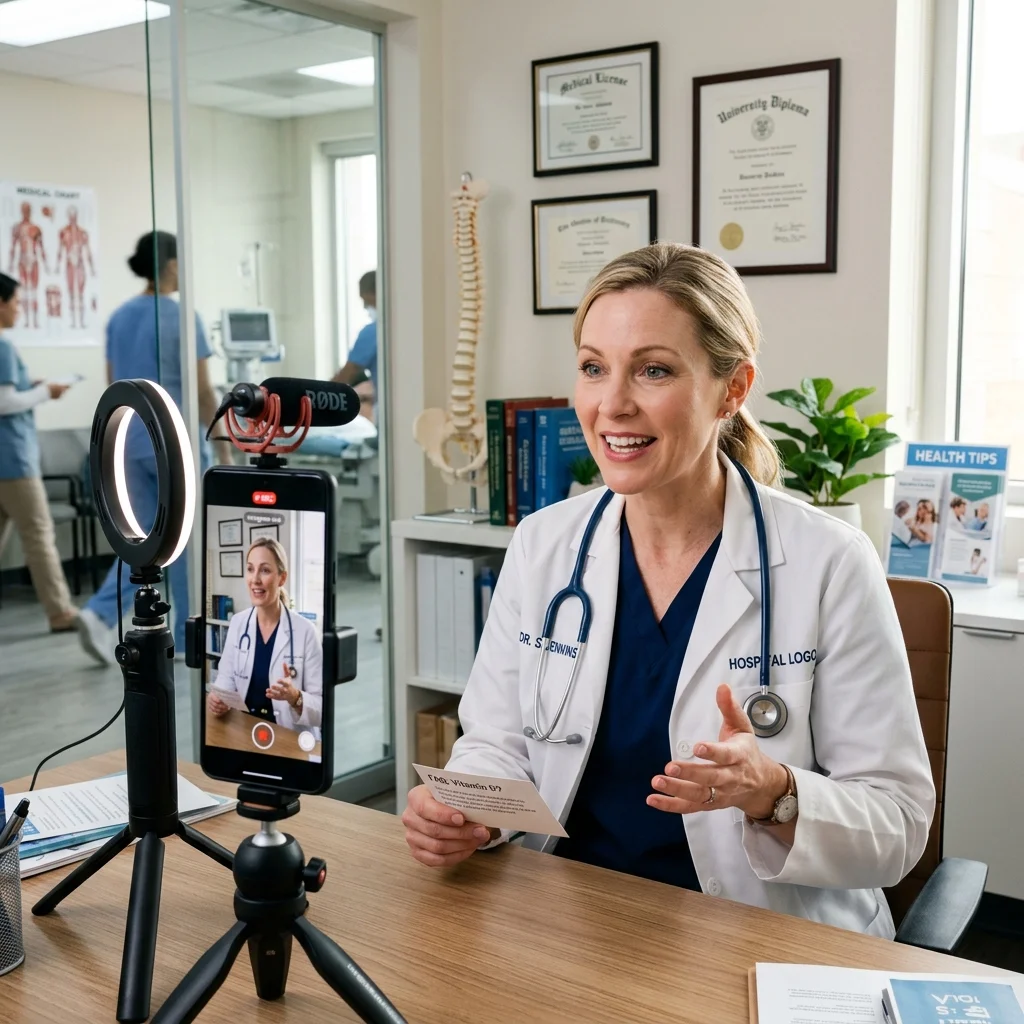
Practice and team introductions. Behind-the-scenes content showing the facility, introducing staff by name and role, and showing what a visit actually looks like reduces a specific kind of anxiety that keeps people from booking in the first place — the fear of the unknown before a first appointment. This content carries essentially zero compliance risk because it does not touch patient information at all, which makes it a safe, easy starting point for practices that are nervous about video. Sharing stories this way is much safer than using patient testimonials safely without proper paperwork.
Department and service explainers. For multi-specialty clinics or hospitals, short Reels walking through what a specific department actually does — what an endocrinologist treats, what happens during a first physical therapy evaluation, what a same-day urgent care visit involves — solve a real information gap. A surprising number of patients do not book because they are not sure their issue qualifies for the kind of care a practice offers. A 30-second Reel can close that gap directly.
Recovery and expectation timelines. Especially strong for orthopedics, physical therapy, dental, and any specialty involving a procedure with a recovery period. People considering a procedure are anxious about the unknown timeline — how long before I can walk normally, how long before the swelling goes down, when can I go back to work. A clinician walking through a realistic, general timeline (not tied to any specific patient's case) addresses that anxiety directly and tends to generate strong saves, which Instagram's algorithm weighs heavily as a signal of valuable content.
Day-in-the-life and "what to expect" content. For practices that compete on patient experience rather than insurance-driven referral (concierge medicine, med spas, elective specialties), Reels showing the physical space, the technology, and the overall experience of a visit work as a brand-building format rather than a pure education format. This is less about answering a clinical question and more about reducing the perceived gap between "unfamiliar medical office" and "place I would feel comfortable in."
The throughline across every format that actually works: the content answers a real question or addresses a real anxiety a prospective patient already has, delivered by a real person at the practice, in a format short enough to watch without committing real attention.
The HIPAA and Compliance Section You Actually Need to Read Carefully
This is the part most generic social media guides either skip entirely or get dangerously vague about, so I want to be specific. Partnering with a dedicated healthcare digital marketing agency in California can help establish pre-approved compliance guidelines for your creative team.
The foundational rule is simple to state and easy to violate without realizing it: never share protected health information without explicit, documented, written patient authorization. This extends much further than most people initially assume. It is not just "do not say the patient's name." Protected health information includes photographs that could identify someone, appointment timing details, descriptions of a condition specific enough to identify a real individual, and any combination of details that, put together, could reasonably point back to a real patient even without naming them.
Violations are not a slap on the wrist. Penalties range from $100 to $50,000 per individual violation, with annual maximums reaching $1.5 million for repeated violations at the same practice. Beyond the financial penalty, a compliance failure in healthcare marketing causes a specific kind of reputational damage that no amount of ad spend repairs, because it directly undermines the trust that healthcare marketing is supposed to be building in the first place.
Here is what this means in practice for Reels specifically, where the short format makes it tempting to skip steps you would not skip in a longer piece of content.
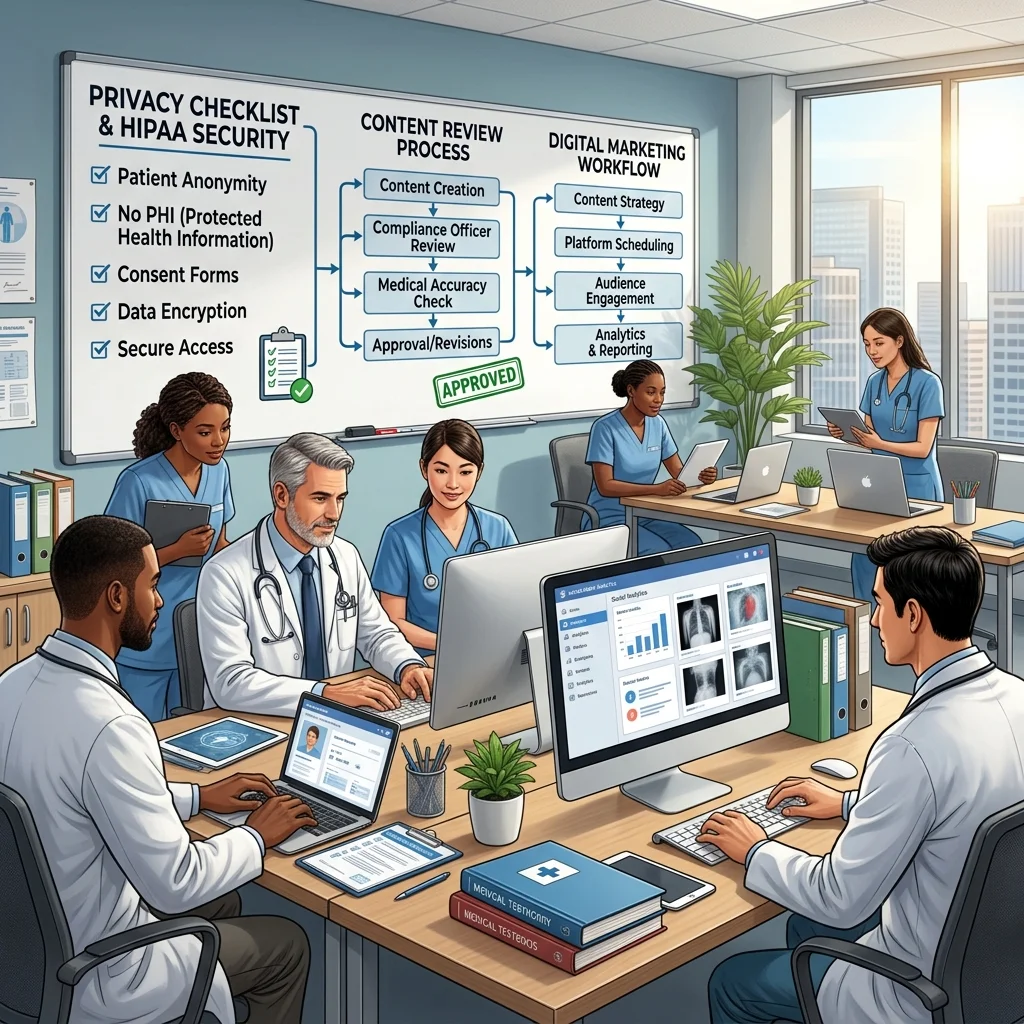
Patient testimonials require documented written authorization, every time, with no exceptions. This is not a verbal "sure, go ahead" in the lobby. It needs to be a signed authorization that specifically covers the use of their name, image, voice, and described condition in social media content, and ideally specifies how long that authorization remains valid. If a practice cannot produce that document, the content should not go up, regardless of how enthusiastic the patient was in the moment.
The fifteen-to-sixty-second format makes comprehensive disclaimers genuinely difficult, and this is a real, practical tension you need a plan for rather than ignoring. The solution most compliant practices land on is layering disclaimer text directly into the video as an on-screen caption or text overlay for the full duration of the clip, rather than relying on the caption field below the video, which a large share of viewers never read. A line like "General information only. Not a substitute for medical advice. Individual results vary." displayed on-screen throughout a testimonial or outcome-related Reel covers ground a buried caption does not.
Educational content about general health topics is the safest category, provided it stays general. Knowing how to write SEO-friendly medical blogs can also guide your video script structure, keeping content structured, factual, and strictly general. Explaining how a knee typically heals after a meniscus repair, in general terms, carries far less risk than describing a specific patient's actual recovery, even if you think you have anonymized it enough. The safer practice almost universally defaults to: have providers explain concepts and general patterns rather than narrating real patient cases, even anonymized ones.
Comment moderation is a compliance issue, not just a brand issue. A Reel explaining a symptom will reliably attract comments from people describing their own symptoms and asking for personalized advice in the comment section. Responding with specific medical guidance in a public comment thread creates real liability — both a compliance risk and a standard-of-care risk, since you are now offering medical guidance to someone who is not your patient, without an exam, in a public forum. The standard practice is a prepared response directing the commenter to call the office or book an appointment, with no actual medical guidance offered in the comment itself.
Team-wide training matters more than most practices realize. The most common HIPAA mistake in social media is not a deliberate violation — it is an innocent one, often from a well-meaning staff member who reposts something, tags a location with a patient still visible in the background, or shares a "before and after we can't believe this transformation" post without realizing the authorization paperwork was never actually completed. A short, clear brief given to every team member about what they personally can and cannot post, including from their own personal accounts when tagging the practice, closes a gap that catches a lot of practices off guard.
If there is one sentence I would want every practice owner to remember from this entire section, it is this: the safest and most sustainable long-term content strategy uses providers as educators explaining general concepts, not as narrators of real patient stories, and treats any patient-specific content as the exception requiring extra paperwork rather than the default approach.
Building a System That Doesn't Depend on One Person Remembering to Post
The practices that succeed with Reels long-term are not the ones with the most creative single idea. They are the ones that built a repeatable system, because the accounts that die after a month almost always die from inconsistency, not from a lack of ideas. Utilizing professional social media marketing services is a reliable way to delegate this calendar scheduling.
A practical structure that has worked across the practices I have looked at closely: pick one or two recurring weekly formats tied to a specific day, so the team is never starting from a blank page. A nutritionist running "Myth Monday." A physical therapy clinic running "Ask the PT Friday." This removes the hardest part of content creation — deciding what to make — and replaces it with a known, recurring slot that just needs to be filled.

For multi-provider practices, distributing the content load across the team rather than putting it all on one person changes the math significantly. If five clinicians each post once a week from their own personal accounts, tagging the practice location and account, the practice gains five additional weekly touchpoints into five different personal networks at effectively zero additional content budget. Combining standard Reels production with TikTok marketing strategies for practices can expand organic footprint quickly. The best of that staff content can then be repurposed into TikTok and Reels patient engagement plans and cross-posted to the main practice account with permission, which also solves the variety problem that a solo-managed account inevitably runs into.
Filming in batches is the other practical lever almost every successful practice eventually adopts. Trying to film a Reel from scratch every single day is where consistency breaks down — someone gets busy, a clinic day runs long, and the post simply does not happen. Blocking 45 minutes once every week or two to film three or four short clips back to back, then scheduling them out over the following days using a tool built for that purpose, removes the daily decision entirely and is the single biggest factor I have seen separate practices that post consistently for a year from the ones that quietly stop after six weeks.
What to Actually Measure (Hint: It Is Not Just Views)
View count is the easiest metric to look at and the least useful one for a healthcare practice trying to acquire patients rather than build a media brand. A Reel with modest views but a high save rate and meaningful profile visits is doing more for your booking volume than a Reel with ten times the views and no follow-through.
Saves matter because Instagram's algorithm reads a save as a strong signal that the content was genuinely useful, which increases future distribution — and because a save behaviorally means the person plans to return to this information later, which is exactly the mindset of someone evaluating whether to book with you. Profile visits and link clicks from a Reel are the more direct commercial signal: people who watched the content and were curious enough to check out the practice itself.
The metric that ties all of this back to actual business outcomes is appointment request or contact form completions that can be traced back to social media as a source. For advanced setups, combining social media and Google Ads data can help pinpoint which touchpoints are actually driving physical bookings.
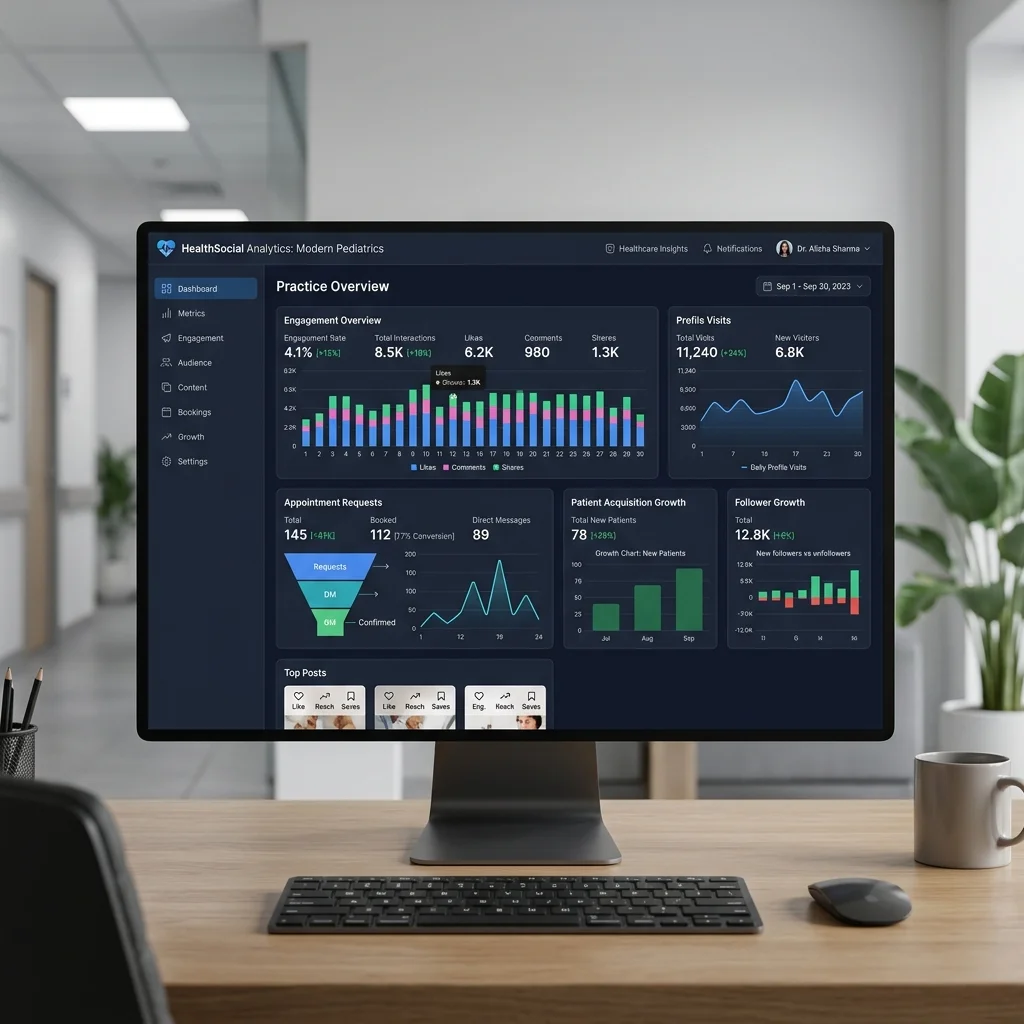
Without that loop closed, you are optimizing for engagement numbers that may or may not be connected to the only metric that actually matters for the business: new patients booked. Setting up high-converting Facebook ads or custom healthcare Facebook ads management campaigns can also verify the booking path works predictably.
How GrowLimo Approaches Healthcare Social Media
We work with healthcare practices across the US, and the approach we take starts with the compliance conversation, not the content calendar, because a content strategy that gets a practice fined is not a strategy worth having regardless of how good the engagement numbers look in the meantime.
From there, we build a recurring content system designed around the formats that are actually driving patient acquisition right now — provider-led explainers, myth-correction content, and practice introduction material — distributed across the team rather than dependent on one person, with a documented authorization process for any content that touches a real patient story.
We connect the content back to actual booking data, not just engagement metrics, because a practice does not need a viral Reel. It needs a steady, compliant stream of new patient inquiries that the practice can point to and say, clearly, "this is working." Partnering with a dedicated healthcare digital marketing agency ensures that your campaigns remain both compliant and performance-focused.
If you want a clear, honest look at what a Reels strategy could realistically do for your specific practice, including the compliance side most agencies gloss over, we offer a free strategy session with no obligation attached.
Frequently Asked Questions
Are Instagram Reels HIPAA compliant for healthcare practices?
Instagram Reels themselves are not inherently HIPAA compliant or non-compliant — compliance depends entirely on what is shown and said in the content, not the platform or format. A Reel of a clinician explaining a general health concept with no patient-specific information carries essentially no HIPAA risk. A Reel showing a real patient's face, name, condition, or treatment details requires documented written authorization from that patient before it can be posted, regardless of how positive or willing the patient seemed in person. The safest long-term approach for healthcare practices is to default to educational, provider-led content that does not reference real patient cases, treating patient testimonials and outcome content as the exception that requires extra documentation rather than the norm.
What can healthcare practices legally post on Instagram Reels?
Healthcare practices can post general health education content explaining conditions, treatments, and recovery patterns without referencing specific patients; behind-the-scenes content showing the facility, equipment, and staff; team introductions and provider spotlights; myth-versus-fact content correcting common misconceptions in their specialty; and patient testimonials, but only with documented written HIPAA authorization specifically covering the use of that patient's name, image, and described condition in social media content. Promotional content about services and treatments is permitted but should avoid specific outcome or success-rate claims that could be considered misleading without substantiation, and any general-information content should include a visible disclaimer noting that it is not a substitute for individualized medical advice.
How often should a medical practice post Reels?
Research and practice-level results both point toward consistency mattering more than volume. Practices publishing two to four Reels per week consistently outperform practices posting less frequently or irregularly, and practices that adopt a recurring weekly format tied to a specific day tend to sustain their posting cadence significantly longer than practices trying to generate a new idea from scratch every time. For a solo practice or single provider, two Reels per week is a realistic, sustainable starting cadence. For multi-provider practices, distributing one Reel per provider per week across the team can reach four or five total weekly posts without overburdening any single person.
What is the difference between AEO, GEO, and traditional SEO for healthcare marketing?
Traditional SEO (Search Engine Optimization) is the practice of improving how a healthcare practice's website ranks in standard search engine results pages. AEO (Answer Engine Optimization) is the practice of structuring content — including video content and the web pages built around it — so that AI-powered answer engines like ChatGPT, Perplexity, and Google AI Overviews select it as a direct, cited source when someone asks a health-related question. GEO (Generative Engine Optimization) is the broader discipline covering all the ways a practice's brand, providers, and services get represented across generative AI platforms, not just the specific moment an answer is generated. For healthcare specifically, this matters because a large and growing share of patients are now asking AI tools health questions directly rather than searching traditionally, and a practice's website, provider bios, and educational content need to be structured clearly enough for those AI systems to find, trust, and cite them.
Why does AEO and GEO matter for a healthcare practice in 2026?
Because patient research behavior has shifted measurably toward AI tools for initial health questions. A meaningful share of Instagram users are already searching the platform directly for health information, and that same shift toward asking a platform a direct question rather than browsing a list of links is happening across AI search tools generally. When a prospective patient asks an AI assistant a general health question and that assistant cites a source, a practice with clear, well-structured, fact-based educational content on its website has a real chance of being that cited source — putting the practice's name in front of a prospective patient at the exact moment they are forming an opinion about where to seek care. Understanding AI search optimization is critical for capturing this organic AI traffic. A practice with no structured educational content online is simply invisible at that moment, regardless of how good their in-person care is.
How does Instagram Reels content support a healthcare practice's AEO and GEO strategy?
Reels themselves are not directly indexed and cited by AI answer engines the way a web page is, but they support AEO and GEO indirectly in two important ways. First, the same provider-led explainer content that performs well as a Reel — a clinician answering one specific patient question clearly and accurately — can and should be repurposed as a written, structured page or blog post on the practice's website, where it becomes directly citable by AI search tools. Second, a practice that consistently publishes credible, provider-authored educational content across multiple formats and platforms builds the kind of demonstrated expertise and cross-platform consistency that both traditional SEO and AI citation systems weigh heavily when deciding which sources to trust. A clinic with an active, credible Reels presence and a matching library of educational web content, supplemented by healthcare voice search SEO tactics, is building authority signals on multiple fronts simultaneously.
What type of healthcare content gets cited most often by AI search tools like ChatGPT and Google AI Overviews?
Content that directly and clearly answers a specific, commonly-asked health question tends to perform best for AI citation, which is the same underlying principle that makes single-question Reels effective on Instagram. Content with clear provider attribution and credentials (physician-authored, reviewed-by attribution) signals trustworthiness to AI systems evaluating which sources to cite for health-related questions, since accuracy and authority carry particular weight in medical topics. Content that includes specific, factual information — general timelines, accepted treatment patterns, clearly stated general guidance — performs better than vague, marketing-toned content. Practices that maintain consistency between what their providers say in video content, what is written on their website, and what appears in their professional bios and credentials, while actively optimizing your Google Business Profile, build the kind of coherent, verifiable presence that AI systems are more likely to trust and cite.
Should a healthcare practice focus on Instagram, TikTok, or both for Reels content?
For most healthcare practices serving the core patient decision-making demographic, Facebook and Instagram remain the primary platforms, given their combined reach among adults in the 35-to-65 age range. Instagram Reels featuring clinicians performing direct patient education currently generate the highest organic engagement specifically within healthcare content. TikTok is a growing channel for healthcare reach, particularly with younger demographics, but it carries stricter content moderation around medical claims and features like duets and stitches that can inadvertently associate a healthcare account with non-compliant content created by other users. Many practices find the most practical approach is producing content once with Instagram as the primary platform, then cross-posting the same clip to TikTok and YouTube Shorts, which captures broader reach without tripling the production workload.
GrowLimo is a full-service digital marketing agency serving businesses across the United States, including healthcare practices. Services include social media management, SEO, PPC advertising, and HIPAA-aware content strategy.
GrowLimo Team
Author & StrategistOur team of digital marketing specialists combines deep industry expertise with data-driven strategies to help businesses grow.
Related Articles
TikTok & Reels Healthcare Marketing for Patient Growth

Social Commerce Is a $100 Billion Market in the US. Most Small Businesses Are Still Treating It Like Brand Awareness.