AI Tools for Marketing: The Honest 2026 Guide to What's Actually Worth Paying For

Why Every "Best AI Tools" List Feels the Same (And Why This One Won't)
I have read probably thirty of these roundups in the last few months, researching this exact topic for our own clients, and almost all of them have the same problem. Twenty-five tools, one paragraph each, no real opinion about which ones are worth your money versus which ones are well-marketed and mediocre. They read like someone ran a search, copied the top results, and reshuffled them.
That is not what I am doing here.
I have actually used most of the tools on this list, or watched a client use them closely enough to know where they help and where they fall apart. Some of what follows is going to contradict the glossy "10/10 must-have" lists you have probably already seen. That is intentional. A 2026 list that agrees with every other 2026 list was not written by anyone who tested anything.
One more thing before we get into it. AI marketing adoption in the US is no longer a "should I" conversation — it is sitting at roughly 84 percent among US marketers, the highest adoption rate of any country measured, and small businesses specifically have hit 67 percent usage. The conversation has shifted from whether to use AI tools to which ones are actually worth the subscription versus which ones are just well-funded marketing for a mediocre product. Understanding AI search optimization for local businesses is a vital part of this new reality. This guide is about answering that second question honestly.
How I'm Grouping These (Because "AI Marketing Tool" Means About Six Different Things)
The phrase "AI tools for marketing" covers wildly different categories of software, and most lists blend them together in a way that makes comparison pointless. A content generation tool and a multi-touch attribution platform are not competing for the same budget or solving the same problem, even though both technically qualify as "AI marketing tools."
I am breaking this down into the categories that actually map to how a real marketing team or small business owner thinks about their workflow: content writing and SEO, visual and video creation, advertising and campaign automation, social media management, email and marketing automation, and analytics and attribution. For each one, I will tell you the tool I would actually recommend, who it is genuinely built for, what it costs, and where it falls short — because every tool on this list falls short of something.
Content Writing and SEO: Where Most Businesses Should Start
This is the category with the clearest, fastest ROI for most small and mid-sized businesses, which is probably why it has the most adoption. Sixty-seven percent of marketers using AI say content creation is their primary use case, and the efficiency gain here is well-documented — somewhere in the range of 60 percent faster content production according to McKinsey's research, which roughly matches what I have seen with clients who adopted these tools properly.
Jasper remains the safest pick if you are a team of five or more people who need consistent brand voice across a high volume of content. It runs $49 a month at the entry tier, with business plans custom-priced for larger teams. What it does well is maintaining a consistent tone across dozens of writers or use cases — blog posts, ad copy, email sequences, social captions — without each piece sounding like it came from a different person. What it does not do well, and what I have heard directly from people who use it daily, is original thinking. It is excellent at producing competent, on-brand drafts. It is not going to generate a genuinely novel angle on a topic without a human pushing it there.
Surfer SEO is a different kind of tool entirely — it is not a writing tool so much as an optimization layer that scores your content in real time against what is actually ranking for your target keyword. At $89 to $129 a month depending on the tier, it analyzes the top-ranking pages for a given search term and tells you what topics, terms, and structural elements your content needs to compete. If you are publishing content regularly and want a data-backed reason for what goes into each piece rather than guessing, investing in professional SEO services is highly recommended. The honest caveat: some recent user feedback has noted that content produced by Surfer's automated writing feature specifically (not the optimization scoring, which is still solid) can read as generic and easy to identify as AI-written. Use it for the data. Be more careful with the auto-generation feature.
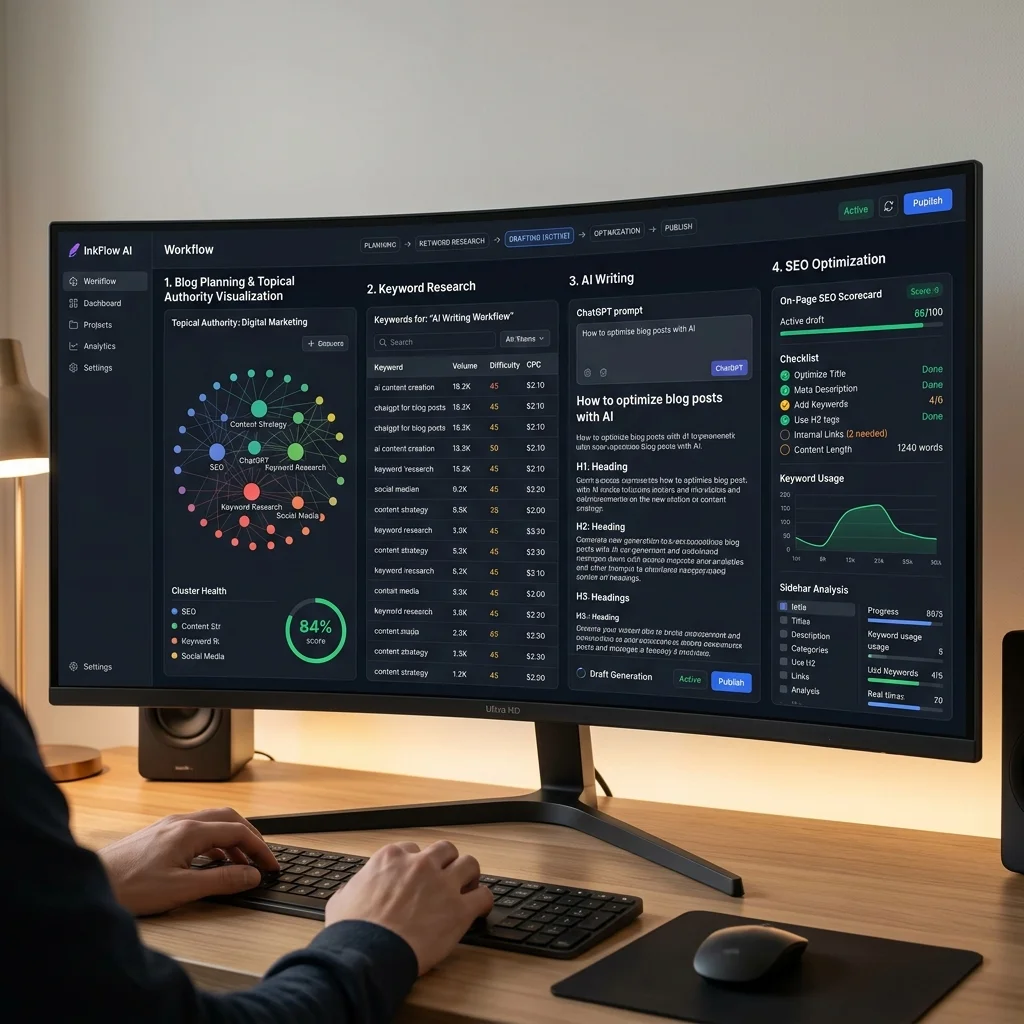
ChatGPT or Claude at $20 a month covers a genuinely surprising amount of ground for solo operators and very small teams. If your content volume is low and you are comfortable doing your own editing and fact-checking, this is where I would tell a bootstrapped business to start before paying for anything more specialized, particularly when planning your digital marketing budget framework. The gap between this and a dedicated tool like Jasper closes significantly once you have built a few solid prompt templates for your specific brand voice and use cases.
For SEO-driven content briefs specifically, Frase has become the budget alternative most people online have settled on, running around $15 a month versus Surfer's higher tiers, with a smaller but real feature gap.
My honest recommendation for a small US business just getting started: ChatGPT or Claude Pro at $20 a month, paired with SEO services in California once you are publishing two or more pieces of content a month and want the keyword data to back up what you are writing. That combination covers the large majority of what most small businesses need from this category.
Visual and Video Creation: The Category With the Clearest Win
If there is one category where I think the value is almost undeniable regardless of business size, it is this one.
Canva AI at $15 a month (or free at a more limited tier) is, in my opinion, the best value-per-dollar tool on this entire list. For a non-designer trying to produce social graphics, ad creative, or basic marketing materials, the gap between what Canva's AI features let you produce now versus what required a designer or a much steeper learning curve two years ago is enormous. The free tier alone covers basic posts and simple design work for a business that only occasionally needs visual content.
Midjourney is the stronger choice once your visual needs get more ambitious — custom imagery, more distinctive art direction, anything where Canva's templates start to feel limiting. It requires more of a learning curve to get consistently good output, and it is priced separately from a marketing-specific platform, so factor in some trial and error before it pays for itself.
Synthesia handles AI video generation, particularly useful for training content, product demos, or localized video across more than 140 languages without re-shooting anything. This is a more specialized tool — most small local businesses will not need it day to day, but for a business doing any kind of explainer content, onboarding video, or multi-market video at scale, it solves a real production bottleneck. To support visual and overall marketing assets, incorporating social media marketing services in California can amplify your output significantly.
Advertising and Campaign Automation: Where AI Is Doing the Most Behind-the-Scenes Work
This is the category where AI has been quietly running for longer than most people realize, because Google Ads and Meta's bidding algorithms have used machine learning for years now — most advertisers just do not think of "Smart Bidding" as an AI marketing tool, even though it functionally is one. Setting up Google Ads for small businesses relies heavily on these underlying neural models to allocate budgets efficiently.
Google's Performance Max is the clearest example: an AI-driven campaign type that handles budget allocation, bid optimization, and creative testing across Search, Display, YouTube, Gmail, and Maps from a single setup, largely autonomously. The honest caveat here, which I have written about elsewhere, is that Performance Max is only as good as the conversion data and creative assets you feed it. It is not a "set it and forget it" tool, despite how it is sometimes marketed — it is an amplifier, and it amplifies bad inputs just as efficiently as good ones. Using advanced Google Ads strategies along with professional Google Ads management services is crucial to keeping these tools on track.
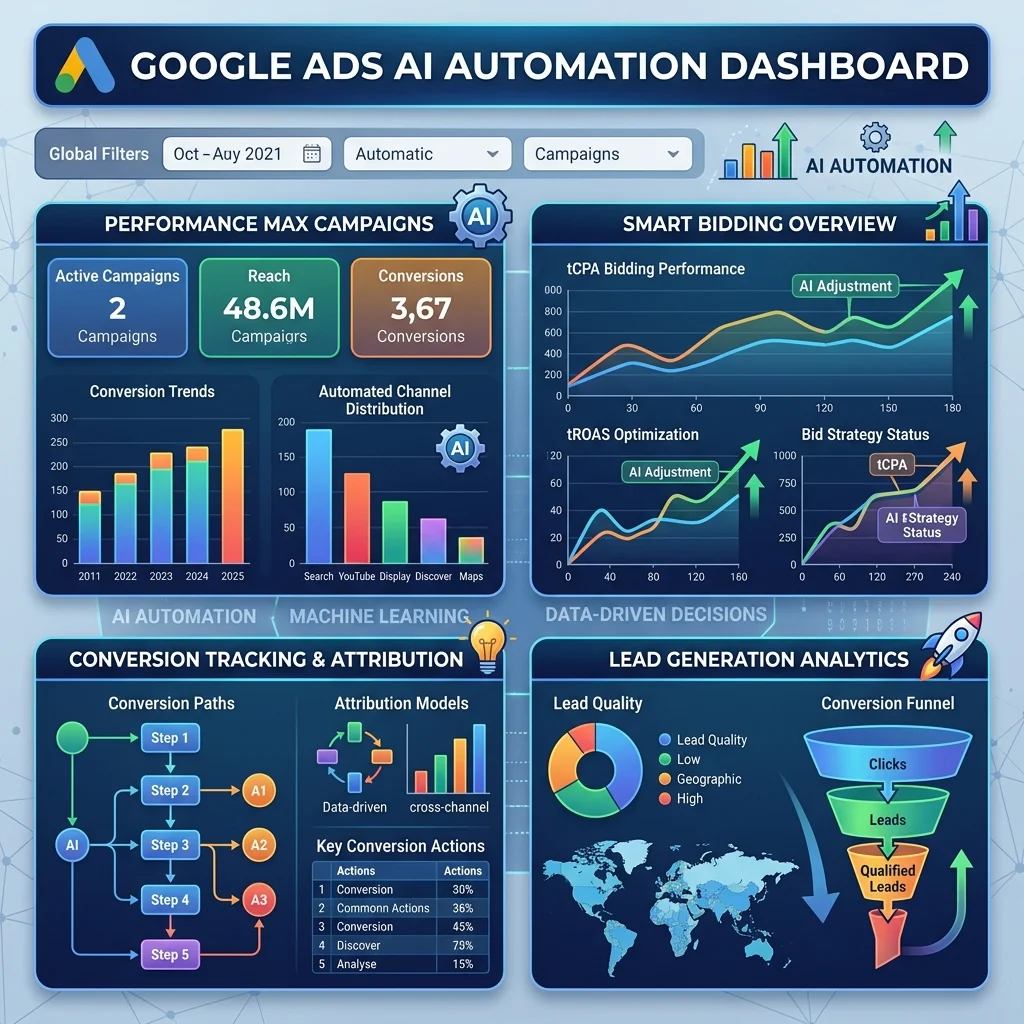
For attribution specifically — figuring out which ads and channels are actually driving revenue rather than just clicks — tools like Cometly have emerged to address a real problem: traditional pixel-based tracking has become unreliable since iOS privacy changes and cookie restrictions broke a lot of the old measurement approach. Server-side tracking tools that reconstruct the customer journey across touchpoints are becoming less of a nice-to-have and more of a requirement for anyone running meaningful ad spend and managing PPC services in California across multiple platforms.
We've found that maximizing ROI with Google Ads requires a strict validation of these automated campaign reports against your actual customer intake logs.
Social Media Management: Where the Tool Matters Less Than the Strategy Behind It
Sprout Social is the strongest overall pick for teams that need publishing, engagement, analytics, and social listening genuinely unified in one platform, and it remains a favorite among professional marketing teams for that reason. It is also priced for that audience — not the cheapest option for a five-person local business.
Buffer and Later are better fits for smaller teams and creator-led brands. Buffer specifically has one of the best price-to-value ratios in this entire guide at around $6 a month for the AI-assisted essentials tier — caption generation, basic scheduling intelligence, and enough automation to meaningfully cut down the time spent on routine posting.
The thing worth saying plainly here: no AI social tool replaces the judgment of someone who actually understands your brand and your audience. AI is genuinely good at suggesting caption variations, optimal posting times, and hashtag research. It is not good at deciding what your brand should or should not say about a sensitive topic, a competitor, or a cultural moment. That judgment call still belongs to a person, and the businesses getting burned on social media in 2026 are disproportionately the ones that let an automated tool publish without a human checking it first.
Before scaling search budgets, check out our Facebook Ads vs Google Ads comparison to evaluate which platform makes sense, and consult with a certified Meta Ads agency in California to configure your pixels correctly.

Email and Marketing Automation: The Quiet ROI Workhorse
HubSpot continues to be the most sensible starting point for a business that wants AI layered into a real CRM rather than a standalone point solution. The free CRM tier is genuinely usable for businesses under roughly a thousand contacts, and the AI features — predictive lead scoring, AI-generated subject lines, content assistance — become meaningfully more useful once you are on the Professional tier, which is a significant jump in price to $890 a month. For most small businesses, the free tier or the $20-a-month Starter tier covers what you actually need; the expensive AI-heavy tiers make more sense once you have outgrown basic automation. Integrating these tools with professional email marketing services can establish a reliable, automated customer pipeline.
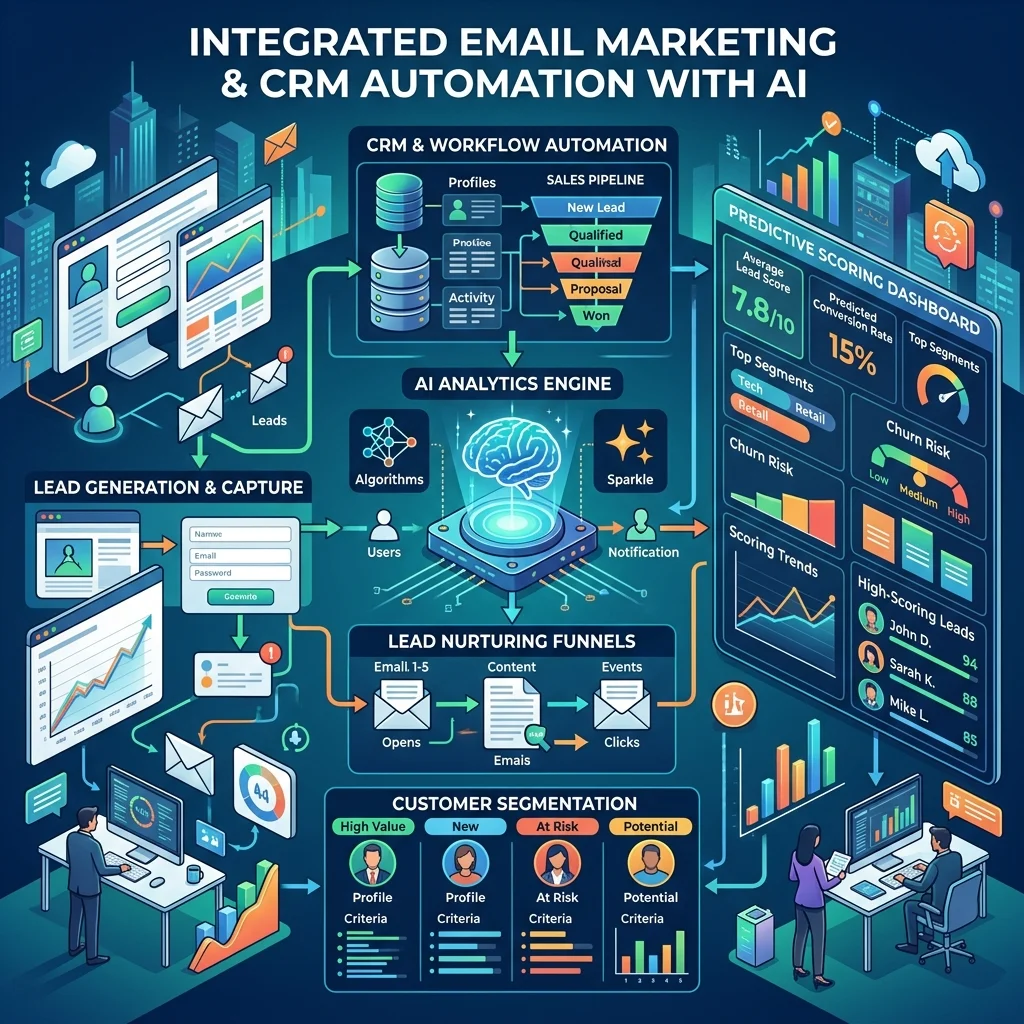
The specific use case AI handles best in this category is send-time optimization and subject line testing — both small, low-risk decisions where AI pattern recognition genuinely outperforms a human guessing what time of day their list opens email. Companies using AI for email report meaningfully higher open rates as a direct result of this kind of optimization, which is one of the more reliably documented wins in the entire AI marketing space.
Analytics and Attribution: The Category Most Businesses Skip and Shouldn't
If your marketing budget is being spent across more than two channels, this category stops being optional. The honest reality is that most small businesses are flying blind on attribution — they know roughly what they are spending and roughly what revenue is coming in, but the connection between specific campaigns and specific dollars is fuzzy at best.
Tools in this space unify data across platforms and apply AI to spot patterns a person reviewing spreadsheets would likely miss — which campaigns are actually driving qualified leads versus just traffic, where budget is being wasted, and what the real cost per acquired customer looks like once you account for the full customer journey rather than last-click attribution. If you are struggling with low conversion rates, learning how to fix website traffic with no leads should be your first priority. This is a genuinely underused category relative to how much value it provides, mostly because it requires clean, centralized data to work well, and a lot of small businesses have not done that unification work yet.
What I Would Actually Tell a Small US Business to Buy
If you read all of the above and just want a direct answer, here is what I would tell a small business owner sitting across from me.
Under $100 a month, building from scratch: ChatGPT or Claude Pro at $20, Canva free or Pro at $15, and Buffer's AI tier at $6. That covers content drafting, visual creation, and social scheduling for well under $50 a month combined, which handles a genuinely large share of what a small marketing operation needs.
Once you are publishing content regularly and it is not converting into traffic the way you would like: add Surfer SEO at $79 to $99 a month. The difference between AI-assisted, data-backed content and content written blind tends to show up clearly in rankings within about three months.
Once you have a real contact list and outgrown manual email sends: add HubSpot's Starter tier at $20 a month. Do not jump to the Professional tier preemptively when allocating your digital marketing budget — most small businesses are nowhere near needing $890-a-month features, and upgrading before you have outgrown the basics is the single most common way I see businesses overspend on this category.
The pattern across nearly every successful small business AI stack I have seen is the same: three or four tools, genuinely learned and used consistently, beat a sprawling stack of ten tools that nobody on the team actually masters. Pick the few that solve your actual bottleneck. Skip the rest until you have outgrown what you have.
A Word on What AI Marketing Tools Are Not Good At
I want to end the tool-by-tool section with something most of these guides skip entirely, because I think it matters more than another tool recommendation.
AI marketing tools are exceptional at speed, pattern recognition across large datasets, and producing competent first drafts at a volume no human team could match. They are not good at understanding your specific customers in a way that requires genuine relationship knowledge, making judgment calls about brand risk, or producing the kind of original insight that comes from someone who has actually sat across the table from your customers and understands what keeps them up at night.
The businesses getting real value from this technology in 2026 are not the ones that handed marketing entirely to AI. They are the ones using AI to handle the repetitive, time-consuming parts of the job — first drafts, data analysis, scheduling, optimization testing — so the humans on the team have more time for the strategic thinking and relationship-building that AI genuinely cannot replace. Companies report an average ROI improvement around 35 percent from AI marketing adoption, but that number comes from teams that integrated AI thoughtfully into an existing strategy, not ones that used it as a substitute for having a strategy at all.
How GrowLimo Uses AI Tools (And Where We Still Insist on a Human)
We use a layered AI stack across our own client work — content optimization tools to inform SEO strategy, automated bid management within Google Ads and Meta as a starting point that we then actively manage and override based on real performance data, and AI-assisted research to speed up the early stages of campaign and content planning.
What we do not do is publish AI-generated content without a strategist reviewing and substantially editing it, hand campaign budget decisions entirely to an automated system without human oversight, or treat any AI tool's output as a finished product rather than a draft that needs real expertise applied to it. The agencies and businesses getting burned by AI in 2026 are almost always the ones that skipped that last step.
If you want help figuring out which AI tools actually make sense for your specific business — rather than buying the whole stack and hoping something sticks — we are happy to walk through that with you as part of a broader marketing strategy conversation. Partnering with a proven digital marketing agency helps prevent expensive software trial-and-error.
Get a free marketing strategy session
Frequently Asked Questions
What are the best AI tools for marketing in 2026?
The best AI marketing tools depend on what specific problem you're solving. For content creation, ChatGPT, Claude, and Jasper lead the category. For SEO optimization, Surfer SEO and Semrush's AI features are the strongest options. For visual content, Canva AI offers the best value, with Midjourney for more advanced creative needs. For marketing automation and CRM, HubSpot remains the most accessible starting point for small businesses. There is no single "best" tool — the right choice depends on your team size, budget, and which part of your marketing workflow is the biggest bottleneck right now.
How much do AI marketing tools cost for a small business?
A functional starter stack costs under $50 a month, combining a general AI assistant like ChatGPT Plus or Claude Pro ($20), a design tool like Canva ($0 to $15), and a social scheduling tool like Buffer ($6). Mid-range tools such as Surfer SEO or Jasper typically run $39 to $175 a month each. Most small marketing teams end up spending somewhere between $100 and $300 a month total across two to three tools once they've found the combination that fits their workflow.
Do AI marketing tools actually improve ROI, or is that just marketing hype?
The data suggests the ROI is real when tools are used correctly. McKinsey's research found AI marketing adoption delivers roughly a 35 percent average ROI improvement, and 91 percent of small and medium businesses using AI report a revenue boost. The important caveat is that these gains come from businesses that integrated AI into an existing strategy rather than using it as a replacement for one. Tools that automate repetitive tasks — first drafts, scheduling, basic optimization — show the most consistent returns. Tools used without human oversight or strategic direction show far more mixed results.
What is the difference between AEO, GEO, and traditional SEO?
Traditional SEO (Search Engine Optimization) is the practice of improving your website's visibility in standard search engine results — the ranked list of blue links. AEO (Answer Engine Optimization) is the practice of structuring content so AI-powered answer engines like ChatGPT, Perplexity, and Google AI Overviews select it as a direct, citable source within a generated answer rather than just a ranked link. GEO (Generative Engine Optimization) is the broader discipline that encompasses AEO — it covers all the strategies businesses use to influence how generative AI platforms represent their brand, product, or service across every AI surface, not just the answer-retrieval moment. In practice, the three are not competing strategies. Strong technical SEO still helps AI engines discover and trust your content in the first place, while AEO and GEO tactics determine whether that trusted content actually becomes the quoted answer.
Why does AEO and GEO matter for marketing in 2026?
Because the way people search has fundamentally changed. Google AI Overviews now appear in roughly 55 percent of all Google searches, and more than 60 percent of Google searches now end without a click to any third-party website. ChatGPT alone processes billions of prompts daily, a meaningful share of which function as search queries that never touch a traditional search engine. For a business that has only optimized for traditional blue-link rankings, this means a growing share of potential customers are getting their answer — and forming their opinion of which businesses to consider — without ever seeing your website at all unless your content is structured to be cited inside that AI-generated answer. Understanding AEO and GEO principles is the key to maintaining brand visibility in AI-first search.
How do I optimize my content for AI search engines like ChatGPT and Perplexity?
The core practices that improve AI citation rates include writing in a clear, directly-answerable structure where questions are followed immediately by concise, factual answers; including specific statistics, data points, and named sources rather than vague claims; using descriptive headers that match the way people actually phrase questions; maintaining consistency in how your brand, services, and facts are described across your website, directory listings, and any other public content the AI might draw from; and earning genuine mentions and citations from other credible sites, since AI engines weigh cross-platform consistency and external validation heavily when deciding what to trust. Research from Princeton on generative engine optimization found that adding expert quotations and statistics to content measurably increased the likelihood of that content being cited by AI systems.
Which AI platforms should a US business optimize for — ChatGPT, Google AI Overviews, or Perplexity?
Ideally, more than one, since each platform sources and weighs information somewhat differently. Google AI Overviews draws heavily from what is already ranking in the top organic results, which means traditional SEO fundamentals still directly support AI Overview visibility. Perplexity tends to reward content freshness, demonstrated authority, and a presence across multiple channels rather than a single source. Microsoft Copilot leans noticeably on LinkedIn data for business and B2B-related queries. For most US small and mid-sized businesses, the practical starting point is making sure your core service pages, FAQ content, and Google Business Profile are all clear, consistent, and fact-rich, since that foundation supports visibility across nearly all of these platforms simultaneously rather than requiring a completely separate strategy for each one.
Can small businesses realistically compete with larger companies using AI marketing tools?
In several respects, yes, more than in the past. AI tools have lowered the cost of producing professional-quality content, design, and campaign optimization to a level that no longer requires a large in-house team or agency retainer to access. Ninety-one percent of small and medium businesses using AI report a revenue increase, and SMB-specific research has found that 78 percent describe AI as a genuine game-changer for their ability to compete. The advantage that still belongs to larger companies is data volume and the budget to run extensive testing. The advantage that AI gives smaller businesses is the ability to produce at a volume and speed that previously required a much larger team, which closes a meaningful part of that competitive gap.
Will AI tools replace the need for a marketing agency or in-house marketer?
No, and the data on this is fairly consistent. AI tools are very good at producing drafts, analyzing data faster than a person could manually, and automating repetitive tasks. They are not good at the strategic judgment calls — what your brand should say about a sensitive topic, which campaigns deserve more budget based on nuanced business context, or how to interpret what a customer actually means versus what they literally typed. The businesses and agencies seeing the best results in 2026 are using AI to handle volume and speed while keeping a human in charge of strategy, judgment, and final review. Treating AI output as a finished product rather than a draft is one of the most common and costly mistakes businesses make with this technology.
Applying these AI tools effectively requires localized configuration depending on your target search region. Read about our approach to integrated campaigns in our guides for digital marketing in Dubai and marketing automation in Australia.
GrowLimo is a full-service digital marketing agency serving businesses across the United States. Services include SEO, PPC advertising, web design, and AI-informed content strategy.
GrowLimo Team
Author & StrategistOur team of digital marketing specialists combines deep industry expertise with data-driven strategies to help businesses grow.
Related Articles

Website Gets Traffic but No Leads? Here's Exactly Why

How to Choose the Best SEO Company in California in 2026